WINSKEL / THE CODING STACK

One objective.
Models working together.

Give Winskel a coding task. It decides when one model should own it, when independent parts can run together, and how the results return to one review.

Uses your existing Claude Code and Codex access. Runs on your Mac.

01 / THE WORKSPACE

Start with the work,
not the model.

Winskel turns one objective into a working plan. The example shows two independent missions running together and a third waiting on both.

The Winskel app with one objective, add an onboarding checklist. Winskel explains the split: storing progress and building the checklist card touch different code, so they run at the same time; showing progress in setup needs both, so it waits. Claude Code Sonnet 5.5 and Codex GPT-5.6 Sol are running, one mission is waiting, and the Tasks panel lists all three.

Actual Winskel product state captured from an example project.

02 / ORCHESTRATION

Three levels of control.

Autopilot is in the current public build. Preferences and Custom are built for the next release and are not in today's download.

01 / MODEBeta ready

Autopilot

Winskel decides.

Give it an objective. Winskel keeps work with one model by default, or plans, splits, routes, and reviews when the work warrants it.

Winskel Settings, Orchestration, Autopilot: Winskel picks the plan and the models, using any available supported model.
02 / MODENext release

Preferences

You set boundaries.

Choose models, roles, and priorities. Winskel makes decisions inside those preferences while respecting exclusions.
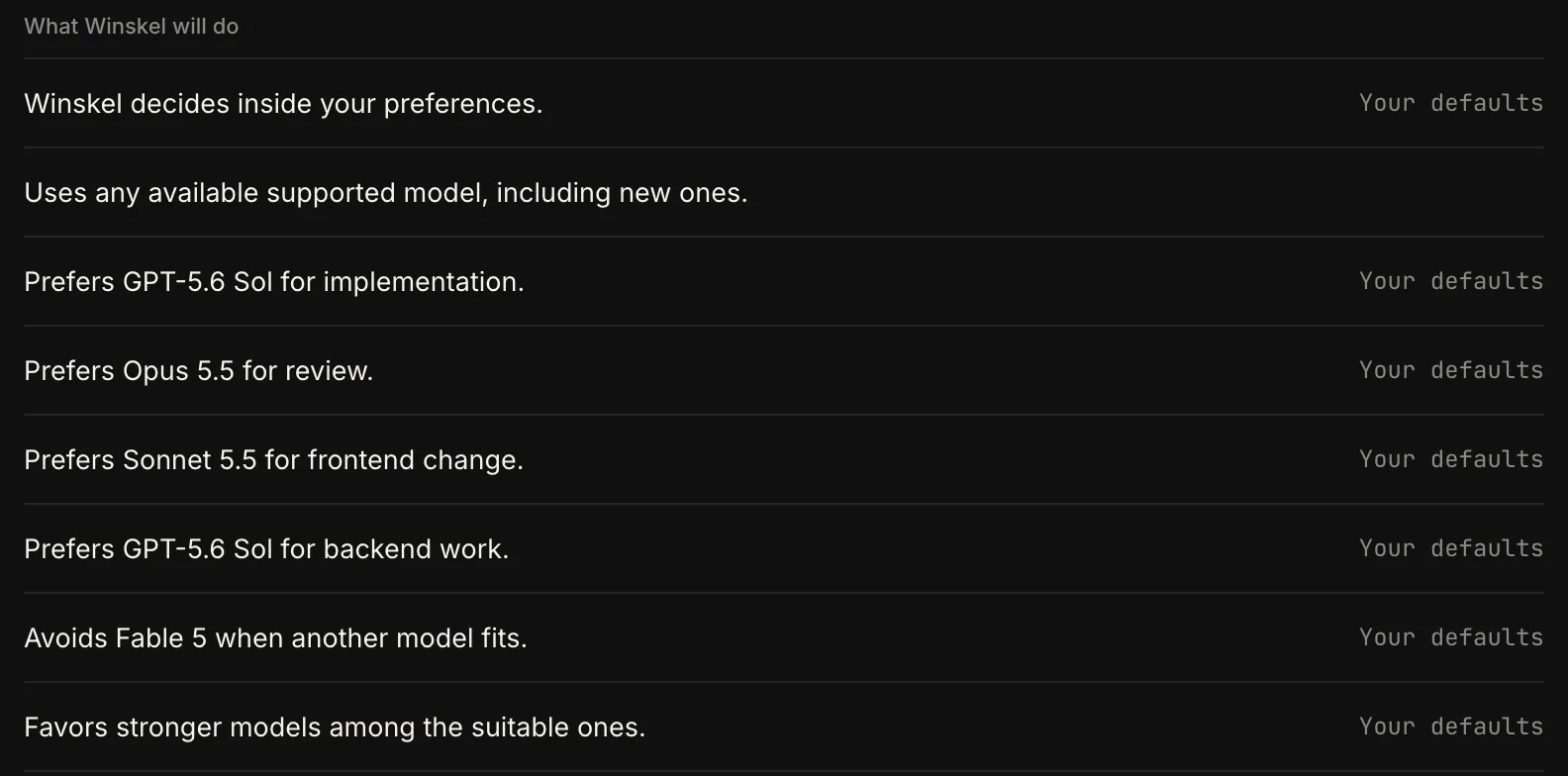
Winskel Settings, Orchestration, Preferences: Winskel decides inside your preferences. It prefers GPT-5.6 Sol for implementation, Opus 5.5 for review, Sonnet 5.5 for frontend changes and GPT-5.6 Sol for backend work, and avoids Fable 5.
03 / MODENext release

Custom

You define the workflow.

Set model roles, review rules, fallback behavior, and human gates. Winskel follows the rules you define.
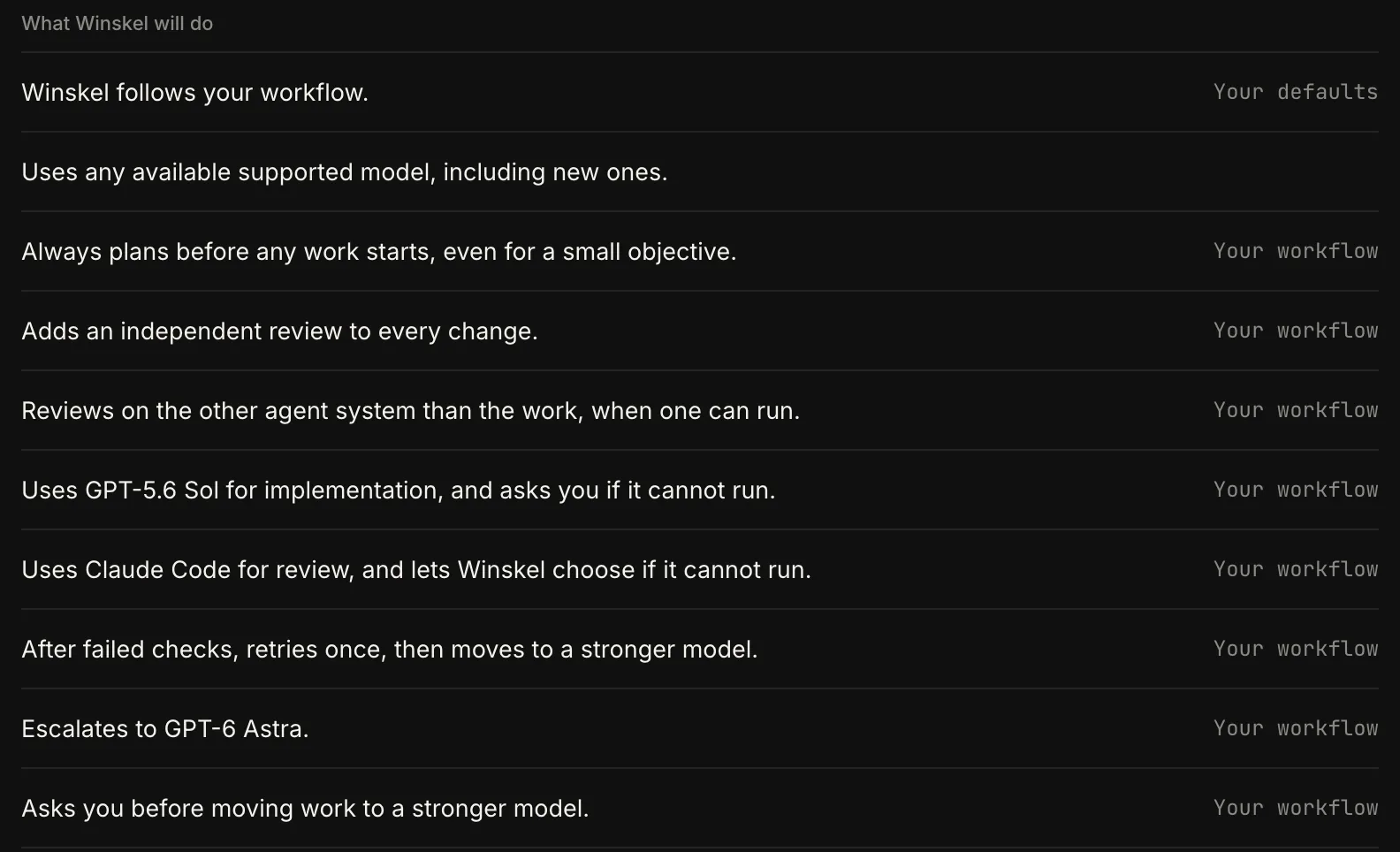
Winskel Settings, Orchestration, Custom: Winskel follows your workflow. It always plans first, adds an independent review on the other agent system, uses GPT-5.6 Sol for implementation, and asks before escalating to GPT-6 Astra.
Explore orchestration modes

03 / EXECUTION

Parallel when useful.
Together when it matters.

Each independent mission gets its own local Git worktree. Work that depends on another mission waits. Winskel can also keep a connected task with one model so context stays intact.
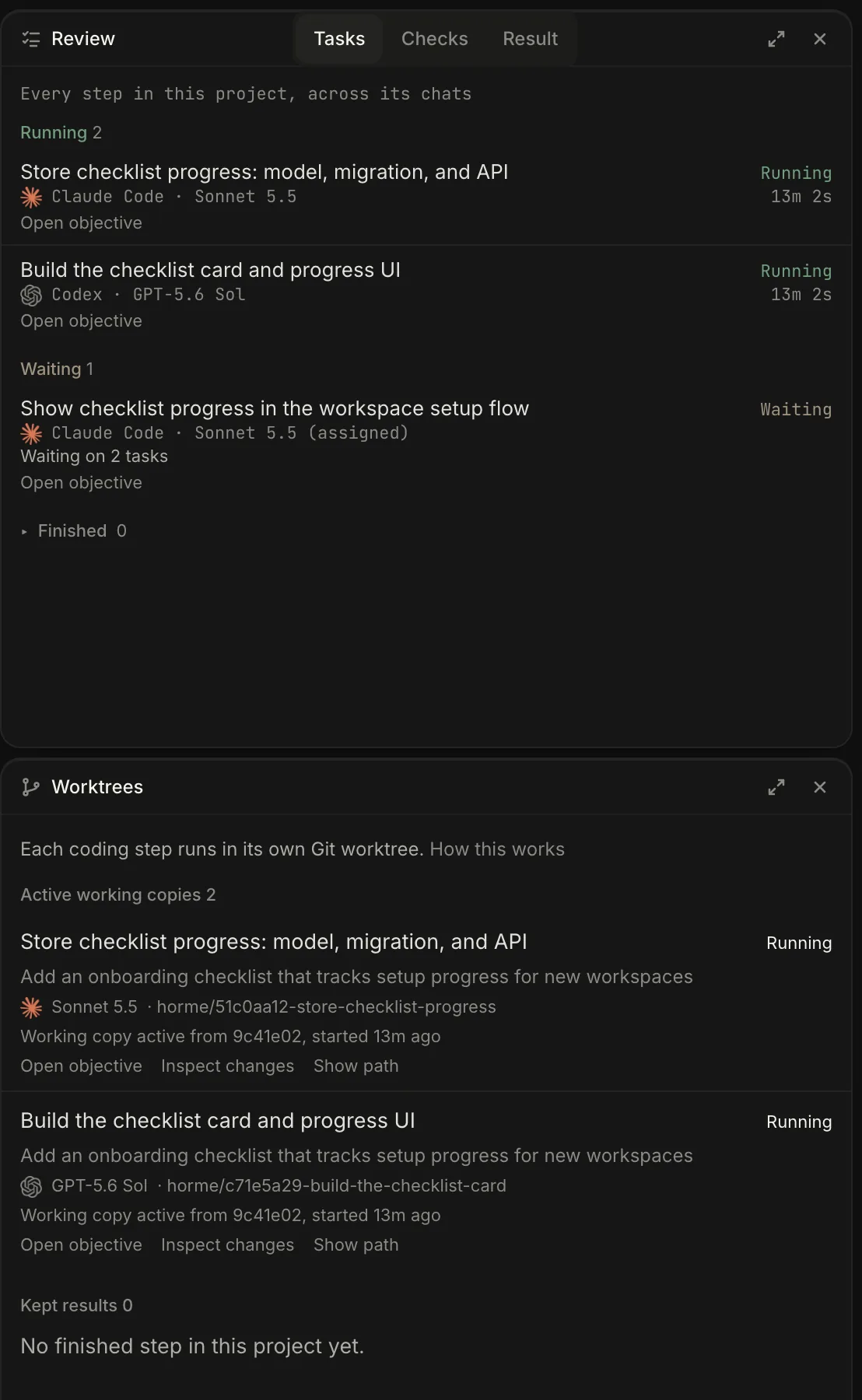
Two Winskel panels. Tasks: two missions running, one on Claude Code Sonnet 5.5 and one on Codex GPT-5.6 Sol, and a third waiting on both. Worktrees: each running mission has its own working copy on its own branch.
Two running missions, one waiting on both.

THE ROUTE IS FOR THIS OBJECTIVE

Claude Code Claude Code
+ Codex Codex

Winskel routes among eligible models you can use. It does not claim a permanent winner between providers or models.

See parallel work

04 / EVIDENCE

Review what actually happened.

See changed files, step ownership, and checks Winskel observed run. A summary alone does not count as a passed check; the developer still reviews and decides what to accept.
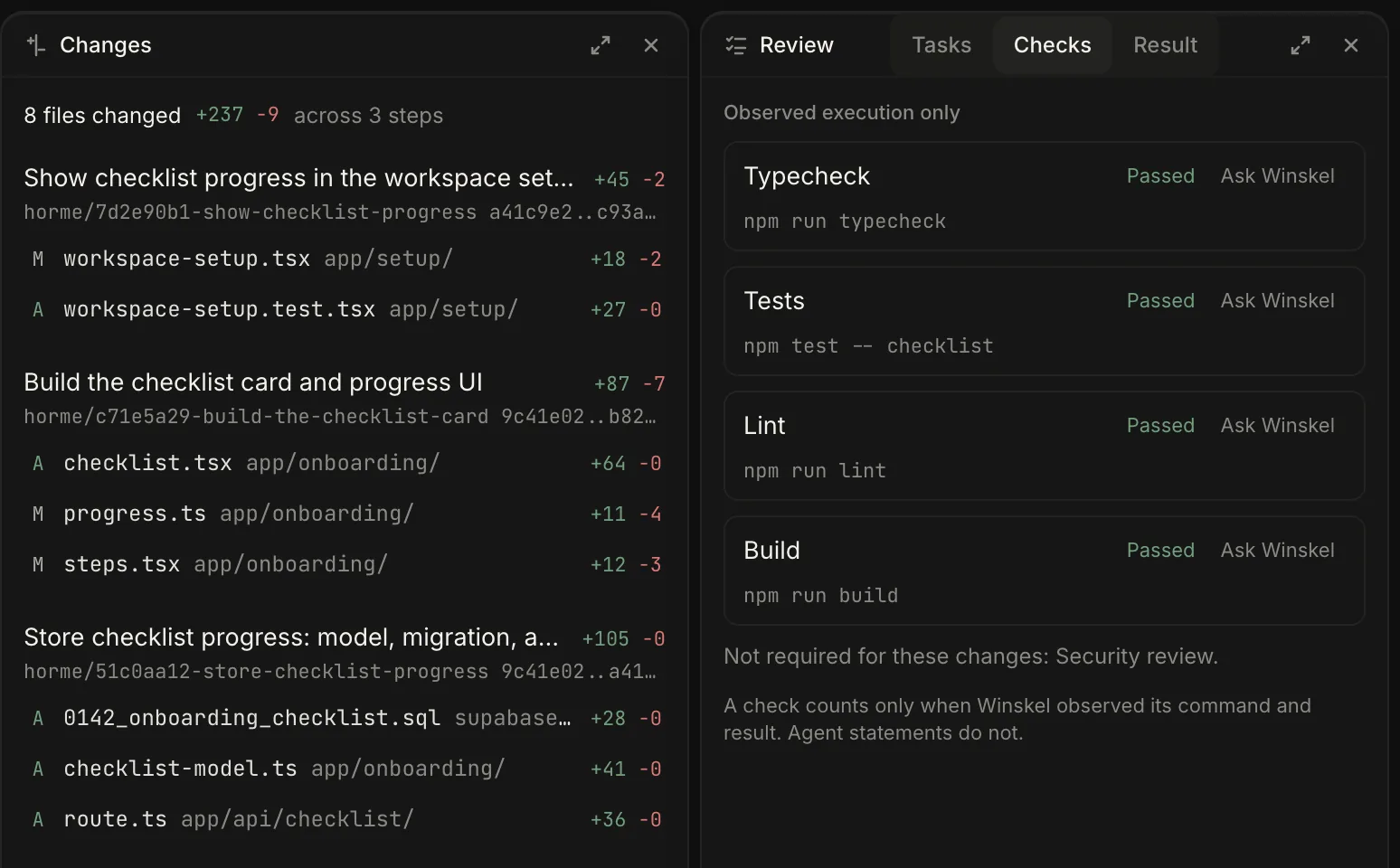
Winskel review of a finished objective. Changes lists 8 files across 3 steps, each with its branch. Checks shows typecheck, tests, lint and build passed, each with the command Winskel saw run, and says a check counts only when Winskel observed its command and result.
Inspect review and checks

05 / WORKFLOW

What coordination changes.

Both paths can produce good work. Winskel takes on the routing, dependency, and review coordination around the objective.

With Winskel

  1. Write one coding objective
  2. Winskel decides whether to keep or split it
  3. Eligible models work in isolated local worktrees
  4. Dependent work waits; independent work can run together
  5. Review the changes, observed checks, and result

Without Winskel

  1. Write a coding objective
  2. Choose an agent and hand it context
  3. Set up separate worktrees if work can run together
  4. Track dependencies across sessions
  5. Collect changes and run checks
  6. Decide whether another agent should review

Workflow illustration. Not a performance benchmark.

WINSKEL / CODING IS THE FIRST STACK

The wider question is
how intelligence works together.

Today Winskel coordinates Claude Code and Codex on software development. The broader research thesis is about composing models and tools around an objective in other kinds of work. Those are future directions, not products available today.

Read the manifesto See pricing